MoreExam
1. Question Content...
EXPLANATION
Answer: X - EXPLANATION Content.
Question1: A cybersecurity analyst has identified a new mission-essential function that utilizes a public cloud-based system. The analyst needs to classify the information processed by the system with respect to CIA. Which of the following should provide the CIA classification for the information?
Question2: An administrator has been investigating the way in which an actor had been exfiltrating confidential data from a web server to a foreign host. After a thorough forensic review, the administrator determined the server's BIOS had been modified by rootkit installation. After removing the rootkit and flashing the BIOS to a known good state, which of the following would BEST protect against future adversary access to the BIOS, in case another rootkit is installed?
Question3: Creating a lessons learned report following an incident will help an analyst to communicate which of the following information? (Select TWO)
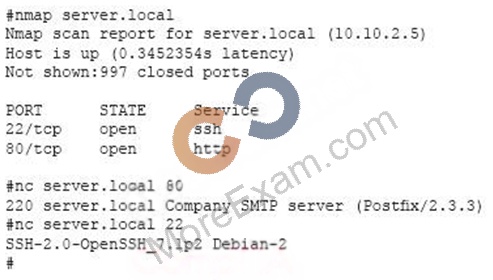
Question4: A system administrator has reviewed the following output:Which of the following can a system administrator infer from the above output?
Question5: Company A permits visiting business partners from Company B to utilize Ethernet ports available in Company A's conference rooms. This access is provided to allow partners the ability to establish VPNs back to Company B's network. The security architect for Company A wants to ensure partners from Company B are able to gain direct Internet access from available ports only, while Company A employees can gain access to the Company A internal network from those same ports. Which of the following can be employed to allow this?
Question6: An incident response report indicates a virus was introduced through a remote host that was connected to corporate resources. A cybersecurity analyst has been asked for a recommendation to solve this issue.Which of the following should be applied?
Question7: An analyst has received unusual alerts on the SIEM dashboard. The analyst wants to get payloads that the hackers are sending toward the target systems without impacting the business operation. Which of the following should the analyst implement?
Question8: Which of the following principles describes how a security analyst should communicate during an incident?
Question9: An analyst is troubleshooting a PC that is experiencing high processor and memory consumption.Investigation reveals the following processes are running on the system:lsass.execsrss.exewordpad.exenotepad.exeWhich of the following tools should the analyst utilize to determine the rogue process?
Question10: A security analyst is creating baseline system images to remediate vulnerabilities found in different operating systems. Each image needs to be scanned before it is deployed. The security analyst must ensure the configurations match industry standard benchmarks and the process can be repeated frequently. Which of the following vulnerability options would BEST create the process requirements?
Question11: A malicious user is reviewing the following output:root:~#ping 192.168.1.1376 4 bytes from 192.168.2.1 icmp_seq=1 ttl=63 time=1.58 ms6 4 bytes from 192.168.2.1 icmp_seq=2 ttl=63 time=1.45 msroot: ~#Based on the above output, which of the following is the device between the malicious user and the target?
Question12: A production web server is experiencing performance issues. Upon investigation, new unauthorized applications have been installed and suspicious traffic was sent through an unused port. Endpoint security is not detecting any malware or virus. Which of the following types of threats would this MOST likely be classified as?
Question13: A pharmacy gives its clients online access to their records and the ability to review bills and make payments. A new SSL vulnerability on a special platform was discovered, allowing an attacker to capture the data between the end user and the web server providing these services. After investigating the platform vulnerability, it was determined that the web services provided are being impacted by this new threat.Which of the following data types are MOST likely at risk of exposure based on this new threat? (Choose two.)
Question14: A business-critical application is unable to support the requirements in the current password policy because it does not allow the use of special characters. Management does not want to accept the risk of a possible security incident due to weak password standards. Which of the following is an appropriate means to limit the risks related to the application?
Question15: A company has been a victim of multiple volumetric DoS attacks. Packet analysis of the offending traffic shows the following:Which of the following mitigation techniques is MOST effective against the above attack?
Question16: A company has recently launched a new billing invoice website for a few key vendors. The cybersecurity analyst is receiving calls that the website is performing slowly and the pages sometimes time out. The analyst notices the website is receiving millions of requests, causing the service to become unavailable.Which of the following can be implemented to maintain the availability of the website?
Question17: Which of the following actions should occur to address any open issues while closing an incident involving various departments within the network?
Question18: A company that is hiring a penetration tester wants to exclude social engineering from the list of authorized activities. Which of the following documents should include these details?
Question19: Review the following results:Which of the following has occurred?
Question20: When reviewing network traffic, a security analyst detects suspicious activity:Based on the log above, which of the following vulnerability attacks is occurring?
Question21: Several users have reported that when attempting to save documents in team folders, the following message is received:The File Cannot Be Copied or Moved - Service Unavailable.Upon further investigation, it is found that the syslog server is not obtaining log events from the file server to which the users are attempting to copy files. Which of the following is the MOST likely scenario causing these issues?
Question22: A cybersecurity analyst has received the laptop of a user who recently left the company. The analyst types'history' into the prompt, and sees this line of code in the latest bash history:This concerns the analyst because this subnet should not be known to users within the company. Which of the following describes what this code has done on the network?
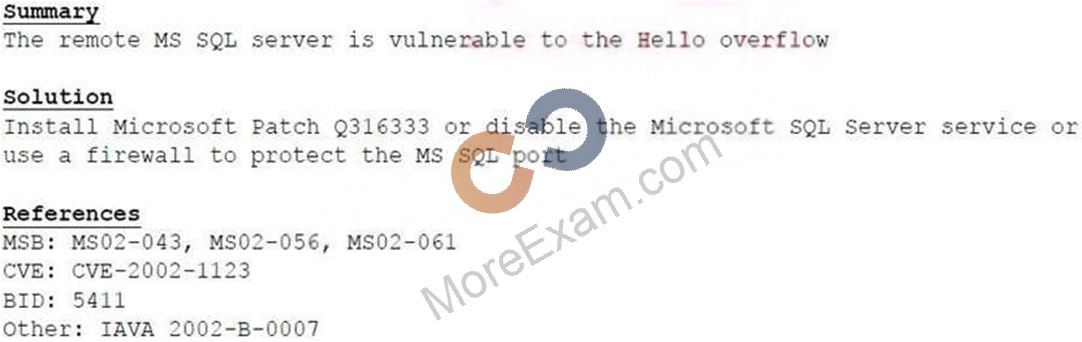
Question23: A cybersecurity consultant is reviewing the following output from a vulnerability scan against a newly installed MS SQL Server 2012 that is slated to go into production in one week:Based on the above information, which of the following should the system administrator do? (Select TWO).
Question24: A security analyst is reviewing logs and discovers that a company-owned computer issued to an employee is generating many alerts and warnings. The analyst continues to review the log events and discovers that a non-company-owned device from a different, unknown IP address is generating the same events. The analyst informs the manager of these findings, and the manager explains that these activities are already known and part of an ongoing events. Given this scenario, which of the following roles are the analyst, the employee, and the manager filling?
Question25: A security analyst is performing a review of Active Directory and discovers two new user accounts in the accounting department. Neither of the users has elevated permissions, but accounts in the group are given access to the company's sensitive financial management application by default. Which of the following is the BEST course of action?
Question26: The security configuration management policy states that all patches must undergo testing procedures before being moved into production. The security analyst notices a single web application server has been downloading and applying patches during non-business hours without testing. There are no apparent adverse reactions, server functionality does not seem to be affected, and no malware was found after a scan.Which of the following actions should the analyst take?
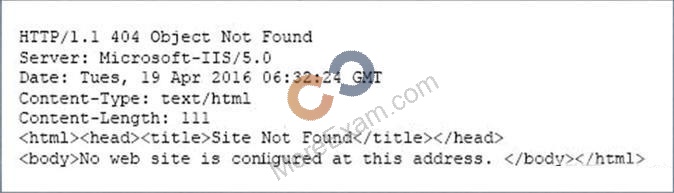
Question27: A cybersecurity analyst is conducting a security test to ensure that information regarding the web server is protected from disclosure. The cybersecurity analyst requested an HTML file from the web server, and the response came back as follows:Which of the following actions should be taken to remediate this security issue?
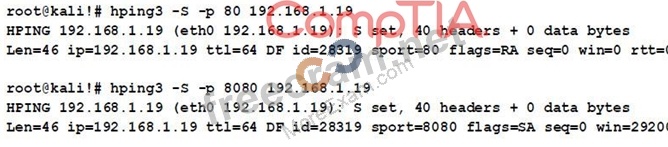
Question28: A cybersecurity analyst is reviewing the following outputs:Which of the following can the analyst infer from the above output?
Question29: A security analyst has noticed that a particular server has consumed over 1TB of bandwidth over the course of the month. It has port 3333 open; however, there have not been any alerts or notices regarding the server or its activities. Which of the following did the analyst discover?
Question30: A cybersecurity professional typed in a URL and discovered the admin panel for the e-commerce application is accessible over the open web with the default password. Which of the following is the MOST secure solution to remediate this vulnerability?
Question31: A software development company in the manufacturing sector has just completed the alpha version of its flagship application. The application has been under development for the past three years. The SOC has seen intrusion attempts made by indicators associated with a particular APT. The company has a hot site location for COOP. Which of the following threats would most likely incur the BIGGEST economic impact for the company?
Question32: An HR employee began having issues with a device becoming unresponsive after attempting to open an email attachment. When informed, the security analyst became suspicious of the situation, even though there was not any unusual behavior on the IDS or any alerts from the antivirus software. Which of the following BEST describes the type of threat in this situation?
Question33: A security analyst has determined that the user interface on an embedded device is vulnerable to common SQL injections. The device is unable to be replaced, and the software cannot be upgraded. Which of the following should the security analyst recommend to add additional security to this device?
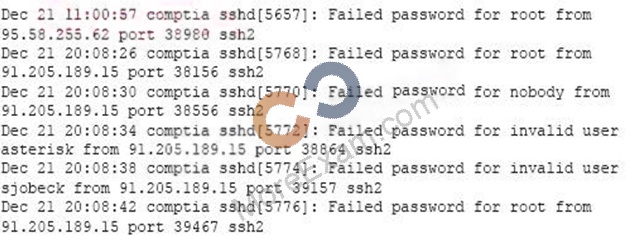
Question34: A security analyst is reviewing the following log after enabling key-based authentication.Given the above information, which of the following steps should be performed NEXT to secure the system?
Question35: In order to meet regulatory compliance objectives for the storage of PHI, vulnerability scans must be conducted on a continuous basis. The last completed scan of the network returned 5,682 possible vulnerabilities. The Chief Information Officer (CIO) would like to establish a remediation plan to resolve all known issues. Which of the following is the BEST way to proceed?
Question36: The security operations team is conducting a mock forensics investigation. Which of the following should be the FIRST action taken after seizing a compromised workstation?
Question37: A malware infection spread to numerous workstations within the marketing department. The workstations were quarantined and replaced with machines.Which of the following represents a FINAL step in the eradication of the malware?
Question38: A security analyst is reviewing IDS logs and notices the following entry:Which of the following attacks is occurring?
Question39: Which of the following policies BEST explains the purpose of a data ownership policy?
Question40: A security professional is analyzing the results of a network utilization report. The report includes the following information:Which of the following servers needs further investigation?
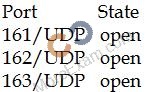
Question41: During a routine network scan, a security administrator discovered an unidentified service running on a new embedded and unmanaged HVAC controller, which is used to monitor the company's datacenter:The enterprise monitoring service requires SNMP and SNMPTRAP connectivity to operate. Which of the following should the security administrator implement to harden the system?
Question42: A cybersecurity analyst has been asked to follow a corporate process that will be used to manage vulnerabilities for an organization. The analyst notices the policy has not been updated in three years.Which of the following should the analyst check to ensure the policy is still accurate?
Question43: Due to new regulations, a company has decided to institute an organizational vulnerability management program and assign the function to the security team. Which of the following frameworks would BEST support the program? (Select two.)
Question44: A security analyst wants to scan the network for active hosts. Which of the following host characteristics help to differentiate between a virtual and physical host?
Question45: A reverse engineer was analyzing malware found on a retailer's network and found code extracting track data in memory. Which of the following threats did the engineer MOST likely uncover?
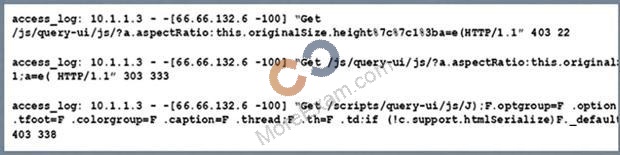
Question46: Given the following access log:Which of the following accurately describes what this log displays?
Question47: Various devices are connecting and authenticating to a single evil twin within the network. Which of the following are MOST likely being targeted?
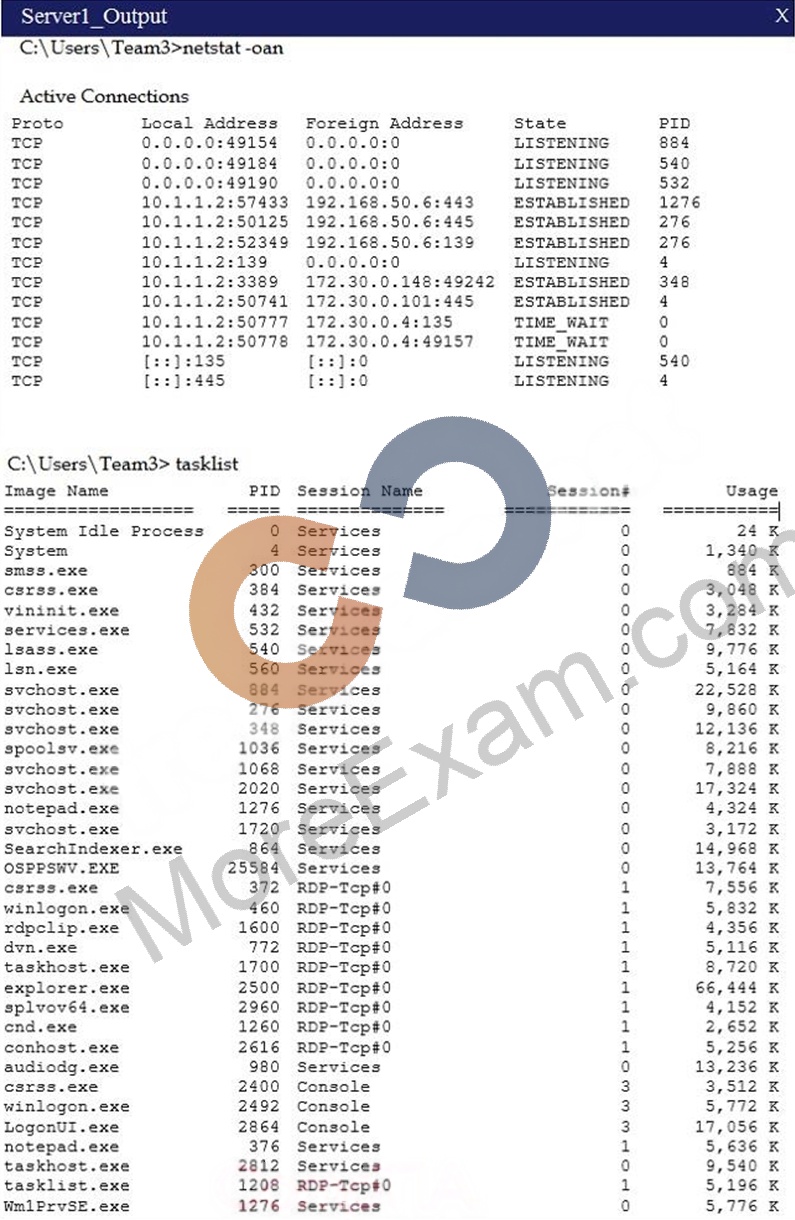
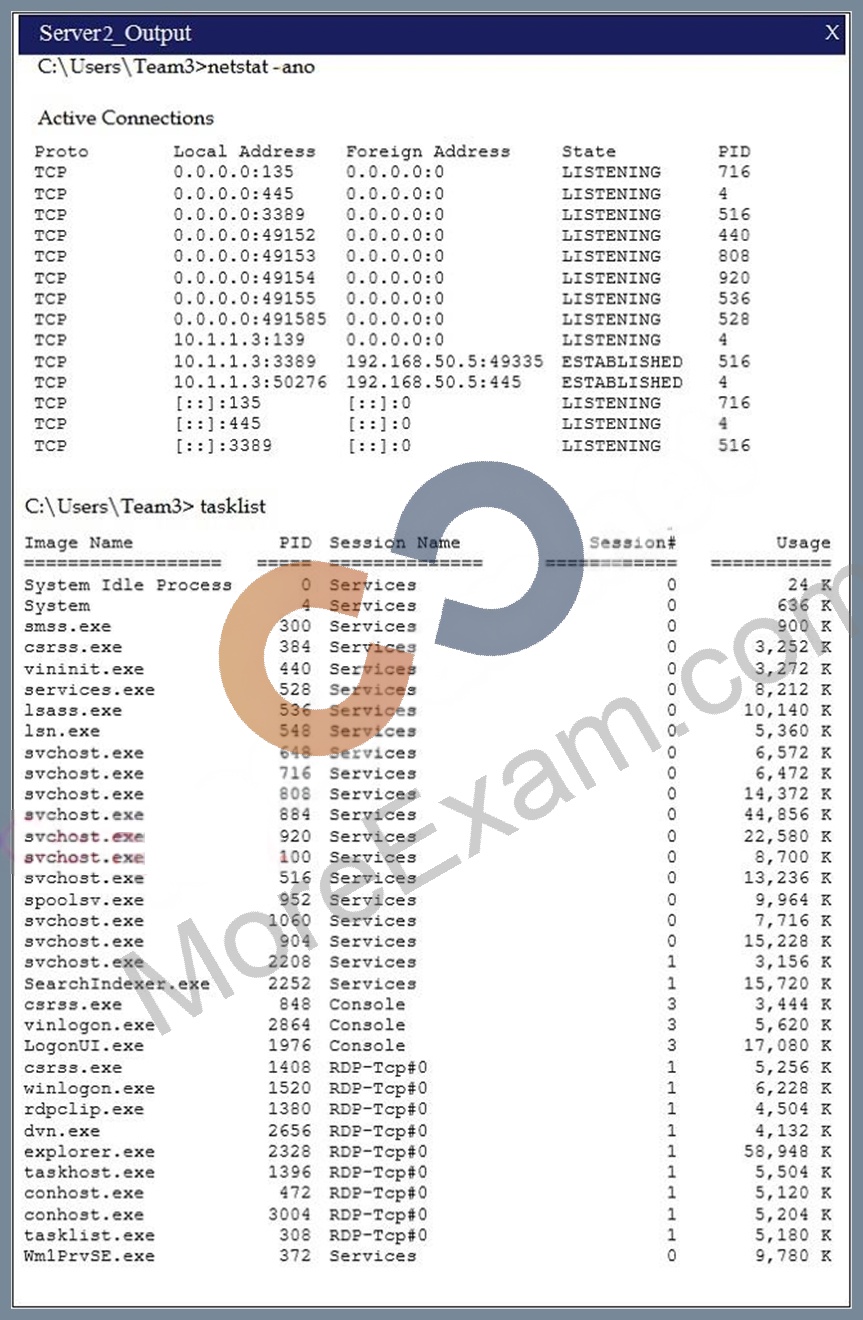
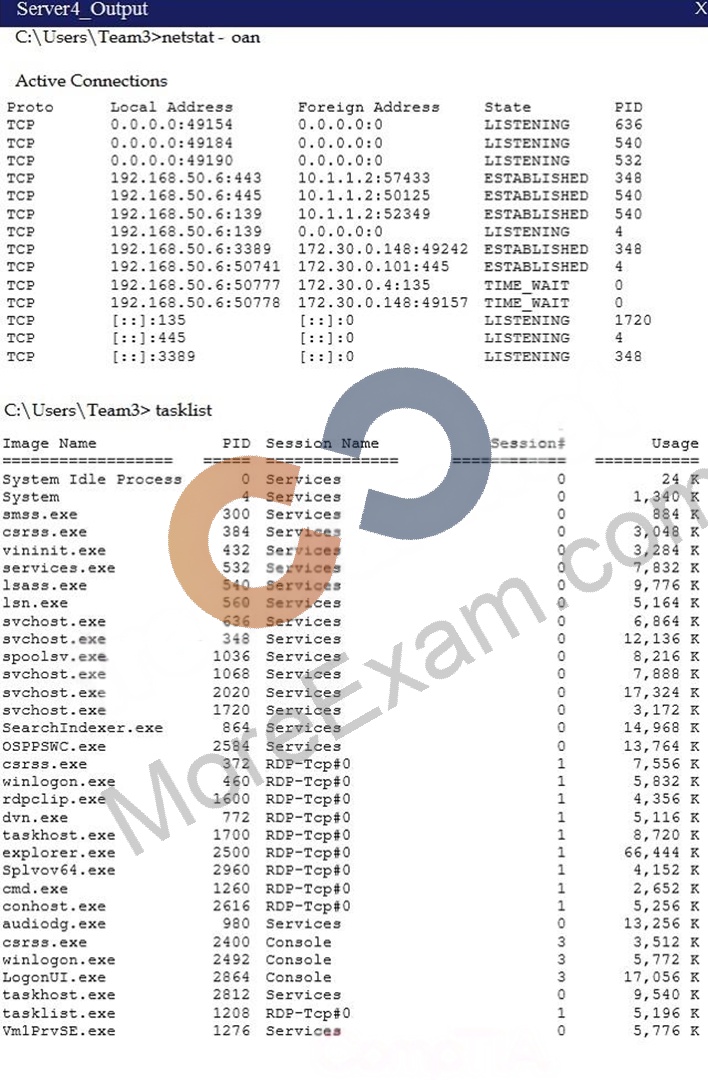
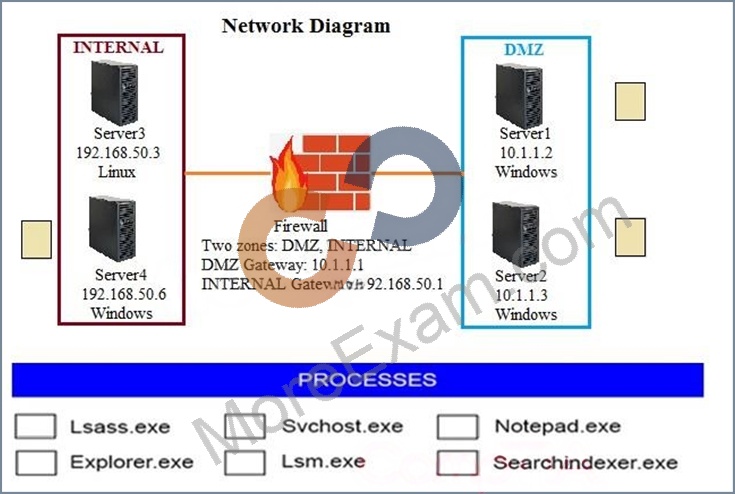
Question48: HOTSPOTMalware is suspected on a server in the environment. The analyst is provided with the output of commands from servers in the environment and needs to review all output files in order to determine which process running on one of the servers may be malware. Servers 1, 2 and 4 are clickable. Select the Server which hosts the malware, and select the process which hosts this malware.Instructions:If any time you would like to bring back the initial state of the simulation, please select the Reset button.When you have completed the simulation, please select the Done button to submit. Once the simulation is submitted, please select the Next button to continue.Hot Area:
Question49: A cybersecurity analyst has several SIEM event logs to review for possible APT activity. The analyst was given several items that include lists of indicators for both IP addresses and domains. Which of the following actions is the BEST approach for the analyst to perform?
Question50: A company wants to update its acceptable use policy (AUP) to ensure it relates to the newly implemented password standard, which requires sponsored authentication of guest wireless devices. Which of the following is MOST likely to be incorporated in the AUP?
Question51: Given the following output from a Linux machine:file2cable -i eth0 -f file.pcapWhich of the following BEST describes what a security analyst is trying to accomplish?
Question52: The new Chief Technology Officer (CTO) is seeking recommendations for network monitoring services for the local intranet. The CTO would like the capability to monitor all traffic to and from the gateway, as well as the capability to block certain content. Which of the following recommendations would meet the needs of the organization?
Question53: There have been several exploits to critical devices within the network. However, there is currently no process to perform vulnerability analysis.Which of the following should the security analyst implement during production hours to identify critical threats and vulnerabilities?
Question54: An alert has been distributed throughout the information security community regarding a critical Apache vulnerability. Which of the following courses of action would ONLY identify the known vulnerability?
Question55: An organization uses Common Vulnerability Scoring System (CVSS) scores to prioritize remediation of vulnerabilities.Management wants to modify the priorities based on a difficulty factor so that vulnerabilities with lower CVSS scores may get a higher priority if they are easier to implement with less risk to system functionality.Management also wants to quantify the priority. Which of the following would achieve management's objective?
Question56: An organization is experiencing degradation of critical services and availability of critical external resources. Which of the following can be used to investigate the issue?
Question57: Law enforcement has contacted a corporation's legal counsel because correlated data from a breach shows the organization as the common denominator from all indicators of compromise. An employee overhears the conversation between legal counsel and law enforcement, and then posts a comment about it on social media. The media then starts contacting other employees about the breach. Which of the following steps should be taken to prevent further disclosure of information about the breach?
Question58: An analyst was testing the latest version of an internally developed CRM system. The analyst created a basic user account. Using a few tools in Kali's latest distribution, the analyst was able to access configuration files, change permissions on folders and groups, and delete and create new system objects.Which of the following techniques did the analyst use to perform these unauthorized activities?
Question59: A security analyst has been asked to remediate a server vulnerability. Once the analyst has located a patch for the vulnerability, which of the following should happen NEXT?
Question60: An analyst finds that unpatched servers have undetected vulnerabilities because the vulnerability scanner does not have the latest set of signatures. Management directed the security team to have personnel update the scanners with the latest signatures at least 24 hours before conducting any scans, but the outcome is unchanged. Which of the following is the BEST logical control to address the failure?
Question61: After completing a vulnerability scan, the following output was noted:Which of the following vulnerabilities has been identified?
Question62: A security audit revealed that port 389 has been used instead of 636 when connecting to LDAP for the authentication of users. The remediation recommended by the audit was to switch the port to 636 wherever technically possible. Which of the following is the BEST response?
Question63: Which of the following are essential components within the rules of engagement for a penetration test?(Select TWO).
Question64: A cybersecurity analyst has received a report that multiple systems are experiencing slowness as a result of a DDoS attack. Which of the following would be the BEST action for the cybersecurity analyst to perform?
Question65: A cybersecurity analyst is hired to review the security posture of a company. The cybersecurity analyst notices a very high network bandwidth consumption due to SYN floods from a small number of IP addresses.Which of the following would be the BEST action to take to support incident response?
Question66: A web application has a newly discovered vulnerability in the authentication method used to validate known company users. The user ID of Admin with a password of "password" grants elevated access to the application over the Internet. Which of the following is the BEST method to discover the vulnerability before a production deployment?
Question67: Which of the following systems would be at the GREATEST risk of compromise if found to have an open vulnerability associated with perfect forward secrecy?
Question68: A recent audit has uncovered several coding errors and a lack of input validation being used on a public portal. Due to the nature of the portal and the severity of the errors, the portal is unable to be patched.Which of the following tools could be used to reduce the risk of being compromised?
Question69: An organization wants to remediate vulnerabilities associated with its web servers. An initial vulnerability scan has been performed, and analysts are reviewing the results. Before starting any remediation, the analysts want to remove false positives to avoid spending time on issues that are not actual vulnerabilities.Which of the following would be an indicator of a likely false positive?
Question70: A security analyst is adding input to the incident response communication plan. A company officer has suggested that if a data breach occurs, only affected parties should be notified to keep an incident from becoming a media headline. Which of the following should the analyst recommend to the company officer?
Question71: Which of the following is MOST effective for correlation analysis by log for threat management?
Question72: A cybersecurity analyst was asked to discover the hardware address of 30 networked assets. From a command line, which of the following tools would be used to provide ARP scanning and reflects the MOST efficient method for accomplishing the task?
Question73: Which of the following items represents a document that includes detailed information on when an incident was detected, how impactful the incident was, and how it was remediated, in addition to incident response effectiveness and any identified gaps needing improvement?
Question74: After scanning the main company's website with the OWASP ZAP tool, a cybersecurity analyst is reviewing the following warning:The analyst reviews a snippet of the offending code:Which of the following is the BEST course of action based on the above warning and code snippet?
Question75: A computer has been infected with a virus and is sending out a beacon to command and control server through an unknown service. Which of the following should a security technician implement to drop the traffic going to the command and control server and still be able to identify the infected host through firewall logs?
Question76: A new policy requires the security team to perform web application and OS vulnerability scans. All of the company's web applications use federated authentication and are accessible via a central portal. Which of the following should be implemented to ensure a more thorough scan of the company's web application, while at the same time reducing false positives?
Question77: A cybersecurity analyst is retained by a firm for an open investigation. Upon arrival, the cybersecurity analyst reviews several security logs.Given the following snippet of code:Which of the following combinations BEST describes the situation and recommendations to be made for this situation?
Question78: The Chief Information Security Officer (CISO) has asked the security staff to identify a framework on which to base the security program. The CISO would like to achieve a certification showing the security program meets all required best practices. Which of the following would be the BEST choice?
Question79: Which of the following commands would a security analyst use to make a copy of an image for forensics use?
Question80: A recent vulnerability scan found four vulnerabilities on an organization's public Internet-facing IP addresses. Prioritizing in order to reduce the risk of a breach to the organization, which of the following should be remediated FIRST?
Question81: Which of the following represent the reasoning behind careful selection of the timelines and time-of-day boundaries for an authorized penetration test? (Select TWO).
Question82: The Chief Executive Officer (CEO) instructed the new Chief Information Security Officer (CISO) to provide a list of enhancement to the company's cybersecurity operation. As a result, the CISO has identified the need to align security operations with industry best practices. Which of the following industry references is appropriate to accomplish this?
Question83: As part of the SDLC, software developers are testing the security of a new web application by inputting large amounts of random data. Which of the following types of testing is being performed?
Question84: A system administrator recently deployed and verified the installation of a critical patch issued by the company's primary OS vendor. This patch was supposed to remedy a vulnerability that would allow an adversary to remotely execute code from over the network. However, the administrator just ran a vulnerability assessment of networked systems, and each of them still reported having the same vulnerability. Which of the following is the MOST likely explanation for this?
Question85: Nmap scan results on a set of IP addresses returned one or more lines beginning with "cpe:/o:" followed by a company name, product name, and version. Which of the following would this string help an administrator to identify?
Question86: Management is concerned with administrator access from outside the network to a key server in the company. Specifically, firewall rules allow access to the server from anywhere in the company. Which of the following would be an effective solution?
Question87: A security analyst is attempting to configure a vulnerability scan for a new segment on the network. Given the requirement to prevent credentials from traversing the network while still conducting a credentialed scan, which of the following is the BEST choice?
Question88: An organization wants to harden its web servers. As part of this goal, leadership has directed that vulnerability scans be performed, and the security team should remediate the servers according to industry best practices. The team has already chosen a vulnerability scanner and performed the necessary scans, and now the team needs to prioritize the fixes. Which of the following would help to prioritize the vulnerabilities for remediation in accordance with industry best practices?
Question89: The business has been informed of a suspected breach of customer data. The internal audit team, in conjunction with the legal department, has begun working with the cybersecurity team to validate the report. To which of the following response processes should the business adhere during the investigation?
Question90: An analyst wants to use a command line tool to identify open ports and running services on a host along with the application that is associated with those services and port. Which of the following should the analyst use?
Question91: A cybersecurity analyst has received an alert that well-known "call home" messages are continuously observed by network sensors at the network boundary. The proxy firewall successfully drops the messages. After determining the alert was a true positive, which of the following represents the MOST likely cause?
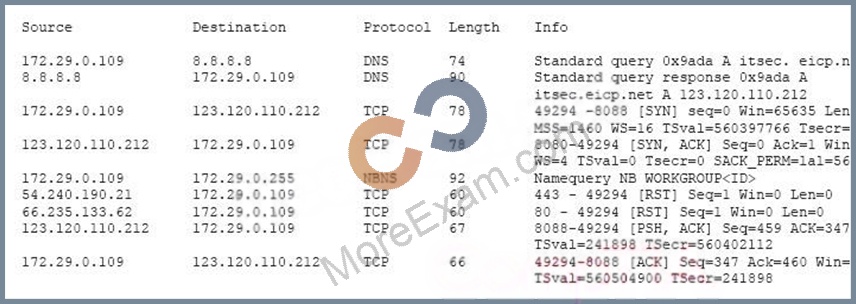
Question92: After reviewing the following packet, a cybersecurity analyst has discovered an unauthorized service is running on a company's computer.Which of the following ACLs, if implemented, will prevent further access ONLY to the unauthorized service and will not impact other services?